Reflections
Thoughts · Daily PostGodspeed
NASA'S LATEST MISSION SPARKS WONDER, REFLECTION AND PRAYER
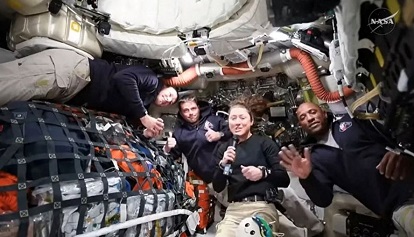

On 11th April 2026, at a press conference following the successful 01.07am (UK time) 'splash-down' in the Pacific Ocean of the four astronauts who flew in the Artemis II mission around the Moon, a NASA spokesperson said she was full of praise for the "teamwork" and "comaraderie" of pilot Victor Glover, commander Reid Wiseman and the two mission specialists, Christina Koch and Jeremy Hansen, and described it as being "A mission for all of humanity."
It was also a mission of reflection and unity as the astronauts of NASA's first crewed lunar flyby in half a century reached their closest approach to the moon, Victor reminded the Earth of Jesus Christ's command to love both God and neighbour. Taking place during a time when the world's facing increasing instability, tension and wars, this was particularly pertinent and the mission which gained a huge live following also sparked wonder, reflection and prayer.
Asked if he had an Easter message, by a reporter from CBS News, Victor, speaking from onboard NASA's Orion spacecraft Integrity during Easter Day reflected on the beauty of creation:
"When I read the Bible and I look at all of the amazing things that were done for us who were created, you have this amazing place, this spaceship," he said. "You guys are talking to us because we're in a spaceship really far from Earth, but you're on a spaceship called Earth that was created to give us a place to live in the universe."
He added, "Maybe the distance we are from you makes you think what we're doing is special, but we're the same distance from you. And I'm trying to tell you, just trust me, you are special."
Glover then pointed to "all of this emptiness ... this whole bunch of nothing, that we call the universe," describing Earth as "this oasis, this beautiful place ... where we get to exist together."He said that Easter Sunday, "whether you celebrate it or not, whether you believe in God or not" is "an opportunity for us to remember where we are, who we are, and that we are the same thing, and that we've got to get through this together," said Glover.
Back in 1968, the Apollo 8 crew, the first humans to leave Earth orbit and circle the Moon, read from the book of Genesis on live television on Christmas Eve. "In the beginning God created the heavens and the earth ..." and the more others on earth see of the cosmos, the more convinced they become that creation didn't just happen by accident.
Moments before the expected loss of signal on 6th April 2026, which ended as scheduled, with the crew safely emerging on a homeward bound trajectory, Glover said, "As we prepare to go out of radio communication, we're still able to feel your true love from Earth. And to all of you down there on Earth and around Earth, we love you from the moon."
Many prayers on social media also asked for the protection of the crew during the high-speed re-entry of the Orion capsule. The extreme heat on their descent meant the capsule lost contact with mission control in Houston for six minutes but thankfully all went well and they had a 'flawless' return.
The 10-day journey took the crew around the moon, spanning 695,081 miles from launch to splashdown off the coast of San Diego, travelling a maximum distance of 252,760 miles from the Earth. Their Orion spacecraft was travelling at more than 24,000mph (38,600km/h) when it hit the Earth's upper atmosphere, with its heatshield subjected to temperatures half as hot as found on the surface of the Sun.
During their mission, the Artemis crew saw a view of the moons far side, the side we never see from earth and new forms of creation. According to NASA, during their April 6 lunar flyby, the astronauts captured more than 7,000 images of the lunar surface and a solar eclipse, during which the Moon blocked the Sun from Orion's vantage point. The imagery includes striking views of earthset and earthrise, impact craters, ancient lava flows, our Milky Way galaxy, and surface fractures and colour variations across the lunar terrain.
They documented the topography along the terminator, the boundary between lunar day and night, where low-angle sunlight casts long shadows across the surface, creating illumination conditions similar to those in the South Pole region where astronauts are scheduled to land in 2028. The crew also proposed potential names for two lunar craters and reported meteoroid impact flashes on the night side of the Moon.
Now the work begins for the scientists to study all that's been captured on film.
(Pic credits: NASA Left: NASA Artemis II crew members answer questions from reporters during the first downlink event of their mission April 2, 2026. (OSV News/Reuters/NASA TV Handout). Right: Crew members after Splash-Down)